How to Winterize Your Plumbing in Charleston
Charleston pipes freeze more often than homeowners expect. Here is how to winterize plumbing in Charleston SC before the first hard freeze hits the Lowcountry.
You winterize plumbing in Charleston SC by insulating every exposed pipe, shutting off and draining outdoor faucets, sealing crawlspace vents, and keeping a slow drip running on the coldest nights. That is the short answer. The longer answer matters more here, because Charleston's freeze risk is different from what most winterization guides assume.
Charleston sits in USDA Zone 8b, and our pipes are built for heat and humidity, not for the 18°F nights that show up in January. We see the same pattern every cold snap: a homeowner wakes up to a burst pipe under the house, and the repair costs more than the entire winterization would have. Here is how to protect your home before that happens.
Do Pipes Actually Freeze in Charleston?
Yes. Pipes freeze in Charleston regularly, and the reason catches people off guard: our homes are not built for it. Water freezes at 32°F, and Charleston averages several nights per winter in the mid-20s, with occasional drops into the teens. During the December 2022 freeze and again in January 2024, Lowcountry plumbers ran call queues three to five days deep for burst pipe repair.
The vulnerability is structural. Most Charleston homes sit on raised pier-and-beam foundations or crawlspaces, which means water supply lines run through open, unheated air. In a Chicago basement, pipes are surrounded by conditioned space. Here, a copper line under a Mount Pleasant house is exposed to whatever the outside temperature is doing.
Older homes in downtown Charleston and West Ashley add another layer of risk. Galvanized steel and early copper lines have thinner walls after decades of corrosion, and they split faster under ice expansion than modern PEX. If your home was built before 1980, assume your pipes are more freeze-sensitive than your neighbor's.
When Should You Winterize Your Pipes in Charleston?
Winterize between late November and mid-December, before Charleston's first hard freeze, which typically arrives in the first two weeks of January. The National Weather Service records Charleston's earliest hard freeze around December 10, so finishing by the first week of December gives you a cushion.
If you miss that window, you can still act fast. Any time the forecast shows three or more consecutive hours below 28°F, you have a freeze event coming. The steps below take about 90 minutes on a single-family home, and most of that is crawling under the house.
Two groups should winterize earlier, by Thanksgiving: anyone with a vacation rental or second home that sits empty for weeks at a time, and commercial property owners with irrigation systems or exterior hose bibs. An empty house with no one to catch a leak is the worst-case scenario.
How to Winterize Plumbing in Charleston SC: Step by Step
Work through these in order. The first four steps cover 90% of the risk in a typical Charleston home.
- Disconnect every garden hose. A hose left connected traps water in the faucet body and the pipe behind it. This is the single most common cause of a split outdoor faucet we see.
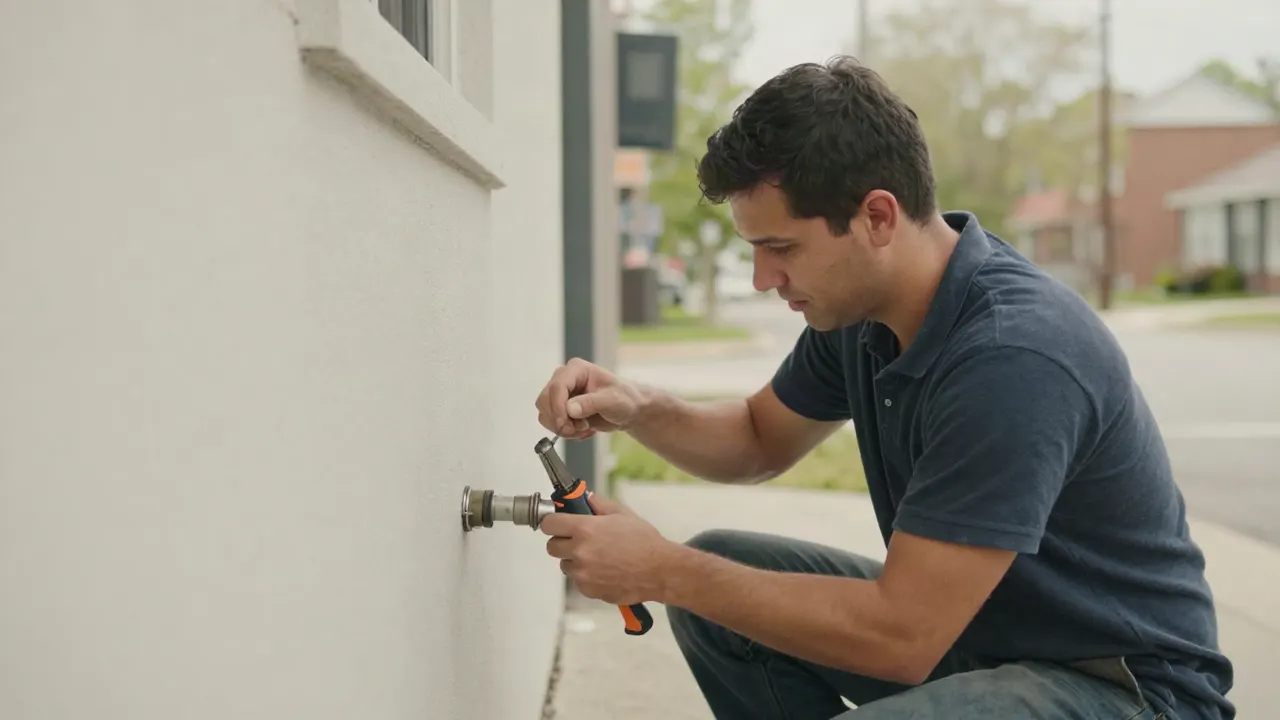
- Shut off and drain outdoor faucets. Find the interior shutoff valve for each hose bib, close it, then open the outdoor faucet to drain the remaining water. If your home has a frost-free sillcock, it still needs the hose removed, but the pipe behind it self-drains.
- Insulate exposed pipes in the crawlspace. Use closed-cell foam pipe sleeves on every accessible supply line. Pay extra attention to pipes near foundation vents and any line running along an exterior wall.
- Close and seal crawlspace vents. Charleston's pier-and-beam homes have open foundation vents that let cold air circulate. Foam board cut to size and friction-fit into each vent cuts crawlspace temperature loss dramatically.
- Insulate the water heater and its lines. A tank water heater loses heat through the tank walls and the first six feet of both the inlet and outlet pipes. An insulation blanket and foam sleeves on those lines keep more heat in the tank.
- Locate your main shutoff. Know where it is before you need it. If a pipe bursts at 2 a.m., you have about 30 seconds to stop the flooding.
- Set up drip protection for hard freezes. On nights forecast below 25°F, open the faucets furthest from your main shutoff to a pencil-lead trickle. Moving water resists freezing, and the drip relieves pressure if ice does form.
If you would rather hand the whole list to someone who does it every winter, our team handles residential plumbing charleston SC work including full winterization walkthroughs.
Winterizing Outdoor Faucets and Hose Bibs
Outdoor faucets are the number one freeze failure point in Charleston, and the fix is cheap. A $4 foam faucet cover over a properly drained sillcock handles most winters. The cover alone is not enough if you skip the drain step.
Here is the sequence that works:
- Disconnect the hose and store it indoors.
- Close the interior shutoff valve (usually in the crawlspace or a nearby closet).
- Open the outdoor faucet and let it drain completely.
- Leave the outdoor faucet open about a quarter turn through the winter.
- Fit an insulated faucet cover over the spout.
Homes in flood-prone areas like emergency plumbing services charleston SC customers call us about often have hose bibs on both the street side and the marsh side. Check both. We regularly find a second faucet behind the house that the owner forgot existed.
If your outdoor faucet has no interior shutoff valve, that is a problem worth fixing before winter. We can add one in a single visit.
Pipe Insulation in Charleston: What Works and What Doesn't
Closed-cell foam pipe sleeves are the right material for Charleston. They run about $1 to $3 per six-foot section at any hardware store, and they handle the temperature swings we get here without degrading.
What does not work: fiberglass wrap alone, newspaper, towels, or the old trick of leaving a cabinet door open with a space heater pointed at it. Fiberglass insulates but does not stop air movement, and Charleston crawlspaces have plenty of air movement. Heat tape works, but only the self-regulating kind, and only when it is plugged in and actually running.
For pipes you cannot reach, or for homes with a history of freeze damage, the durable fix is replacing the vulnerable section with PEX. PEX expands under freezing pressure instead of splitting. A 20-foot PEX replacement run in a crawlspace typically runs $350 to $700 in 2026 pricing, and it ends the problem permanently.
If your home has old galvanized or thin-wall copper lines that have already been patched once, pipe replacement charleston SC is worth pricing before winter rather than after a burst.
Common Winterization Mistakes We See Every Year
These are the calls we get every January, in roughly this order of frequency.
- Leaving the hose connected. Water trapped in the faucet body splits the valve seat. This is a $180 to $400 repair that a 30-second hose disconnect prevents.
- Insulating pipes but leaving crawlspace vents open. Insulation slows heat loss; it does not generate heat. An open vent undoes the work.
- Forgetting the irrigation system. Sprinkler lines and backflow assemblies hold water. If you have an irrigation system, it needs its own blowout.
- Assuming the water heater is safe. A tank water heater in a cold garage or crawlspace can freeze its inlet line. Insulate the first six feet on both sides.
- Dripping the wrong faucet. Drip the faucet furthest from the main shutoff, not the one closest to the water heater.
- Waiting until the freeze starts. Hardware stores sell out of pipe insulation and faucet covers within hours of a freeze warning. Buy in November.
One more: homeowners sometimes shut off the main and drain the whole house before a short freeze. Do not do that unless you are leaving for an extended trip. A drained house still needs every trap primed with antifreeze, and skipping that step lets sewer gas into the home.
When to Call a Professional
Call a plumber when you cannot reach the vulnerable pipes, when your home has a history of freeze damage, or when you are leaving town for more than a week during winter. Those are the three situations where DIY winterization leaves gaps that cost real money.
We also get called for the aftermath. If you hear water running when nothing is on, notice a spike in your water bill, or see moisture along a crawlspace joist, you likely have a pinhole leak from a freeze event that already happened. That is a leak detection and repair charleston SC job, and finding it early keeps a $300 repair from becoming a $4,000 floor replacement.
Charleston Harborline Plumbing handles winterization walkthroughs, crawlspace pipe insulation, outdoor faucet shutoff installation, and emergency freeze repairs across the Lowcountry. We quote the work upfront and do the job in one visit whenever the scope allows.
Frequently Asked Questions
How do I winterize my plumbing in Charleston SC?
Disconnect all hoses, shut off and drain outdoor faucets, insulate exposed crawlspace pipes with closed-cell foam sleeves, seal foundation vents, and insulate the water heater lines. The full process takes about 90 minutes on a typical Charleston single-family home and should be done by early December.
Do pipes freeze in Charleston?
Yes. Charleston averages several nights per winter in the mid-20s, and pipes freeze at 32°F. Raised pier-and-beam foundations leave supply lines exposed to outside air, which is why Lowcountry homes see more freeze damage than the mild climate would suggest.
When should I winterize my pipes in Charleston?
Finish by the first week of December. Charleston's first hard freeze typically lands in early January, and the earliest on record is around December 10. Vacation homes and rental properties should be winterized by Thanksgiving.
Who offers plumbing winterization in Charleston?
Charleston Harborline Plumbing provides winterization walkthroughs, crawlspace pipe insulation, outdoor faucet shutoff installation, and freeze-damage repair throughout Charleston and the surrounding Lowcountry. We quote the work upfront and handle most winterization jobs in a single visit.
What temperature should I drip my faucets in Charleston?
Start a pencil-lead drip when the forecast drops below 25°F for three or more hours. Drip the faucet furthest from your main shutoff. Once temperatures climb back above 32°F, close the faucet to avoid wasting water.
Get Help With Plumbing in Charleston
Winterizing your plumbing in Charleston takes an afternoon and prevents the repair that would take a week. If you would rather have it done right the first time, we will walk your crawlspace, insulate what needs insulating, and set up your outdoor faucets for the season.
Call Charleston Harborline Plumbing at (854) 226-6111 to schedule your winterization before the first freeze.